What is Stainless Steel Passivation?
Stainless steel is widely valued for its strength, durability, and corrosion resistance. From food processing equipment and pharmaceutical vessels to aerospace components and architectural features,
Stainless steel is chosen across industries for its durability, corrosion resistance, and clean professional appearance. However, even high‑quality stainless isn’t immune to surface imperfections. One of the most common – and often the most frustrating – issues is the appearance of white marking on stainless steel surfaces.
These chalky, cloudy, or streaky white marks can show up after cleaning, welding, or during storage. Fortunately, they are both preventable and treatable when you understand what’s causing them.
Below, we break down why white marking occurs and the most effective ways to eliminate it for good.
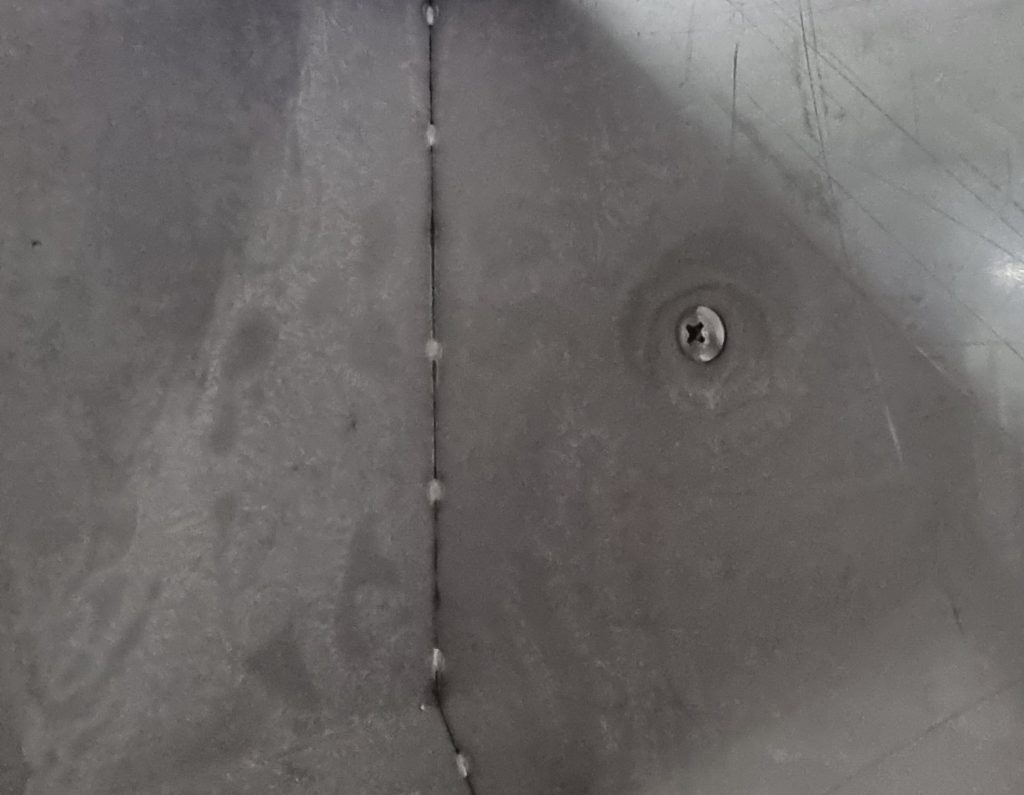
White marks on stainless
What causes white marking on stainless steel?
White marking on stainless steel is most commonly caused by cleaning fluids, neutralising agents, or hard‑water minerals drying on the surface. When these residues are left to evaporate, they form chalky white streaks, spots, or hazy films that are difficult to remove and can dull the appearance of the steel.
Another major contributor is incomplete rinsing. Even when the correct cleaning or passivation chemicals are used, failing to fully rinse them off can leave behind deposits that dry into pale marks. This is especially common when rinsing is done with hard water, or when surfaces are allowed to air-dry without adequate drainage.
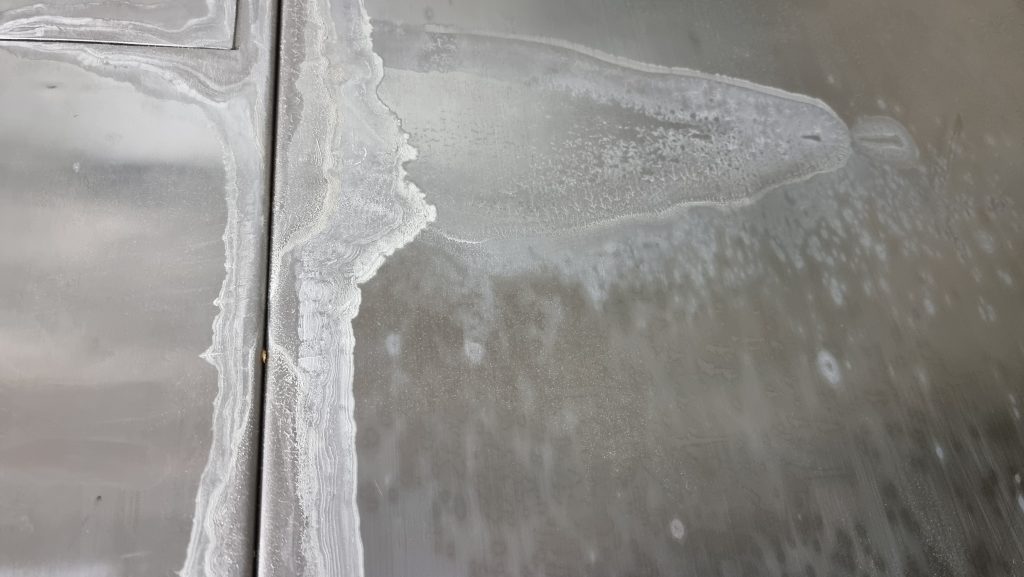
Acid residue on stainless steel
How to remove existing white marking
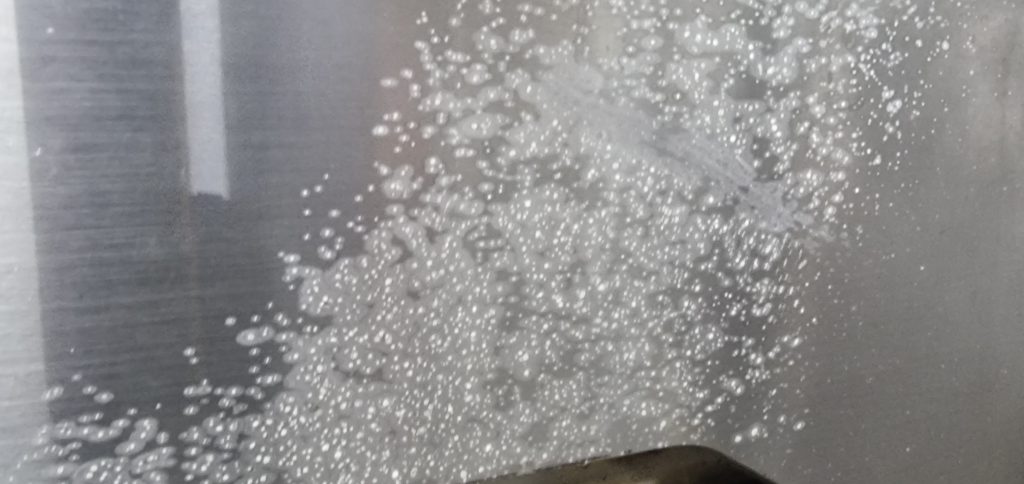
How to prevent white marking in the future

This post was written and brought you by Stainless Finishing Solutions Ltd.
Stainless steel is widely valued for its strength, durability, and corrosion resistance. From food processing equipment and pharmaceutical vessels to aerospace components and architectural features,
In March we were proud to support World Kidney Day 2026 by donating £10 per every order that week to Kidney Care UK. Kidney Care
Next week, we are proud to support World Kidney Day 2026 – a global awareness day dedicated to kidney health. This year, World Kidney Day
Stainless steel is chosen across industries for its durability, corrosion resistance, and clean professional appearance. However, even high‑quality stainless isn’t immune to surface imperfections. One
Discolouration on a stainless weld Stainless steel is renowned for its sleek appearance and corrosion resistance. But if you’ve ever worked with it – especially
Stainless Steel Weld with Discolouration Welding stainless often results in heat-affected zones and discolouration, which can compromise the appearance and corrosion resistance of the metal.
| Cookie | Duration | Description |
|---|---|---|
| cookielawinfo-checbox-analytics | 11 months | This cookie is set by GDPR Cookie Consent plugin. The cookie is used to store the user consent for the cookies in the category "Analytics". |
| cookielawinfo-checbox-functional | 11 months | The cookie is set by GDPR cookie consent to record the user consent for the cookies in the category "Functional". |
| cookielawinfo-checbox-others | 11 months | This cookie is set by GDPR Cookie Consent plugin. The cookie is used to store the user consent for the cookies in the category "Other. |
| cookielawinfo-checkbox-necessary | 11 months | This cookie is set by GDPR Cookie Consent plugin. The cookies is used to store the user consent for the cookies in the category "Necessary". |
| cookielawinfo-checkbox-performance | 11 months | This cookie is set by GDPR Cookie Consent plugin. The cookie is used to store the user consent for the cookies in the category "Performance". |
| viewed_cookie_policy | 11 months | The cookie is set by the GDPR Cookie Consent plugin and is used to store whether or not user has consented to the use of cookies. It does not store any personal data. |